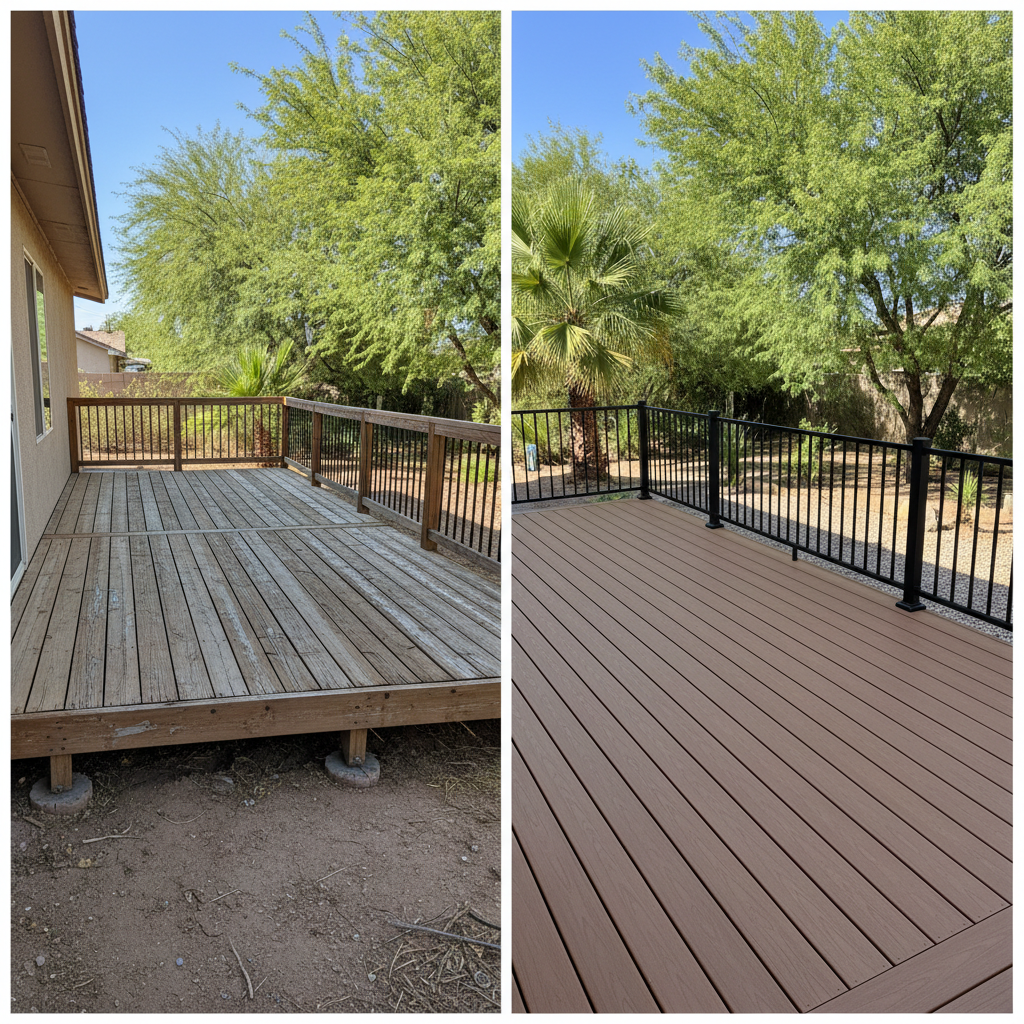
Alright, Laveen, let's talk decks. Specifically, composite decks. You're probably looking for something that looks good, lasts a long time, and doesn't demand all your weekends for maintenance, right? That's why composite is so popular. But when you start digging, you'll hear terms like 'capped' and 'uncapped,' and it can get a little confusing. Don't sweat it; I'm here to clear things up.
As a local contractor with Laveen Deck & Porch, I've seen plenty of decks baked by our Arizona sun. And believe me, I know what holds up and what doesn't. So, let's compare these two main types of composite decking honestly: what they are, how they perform, and which one usually makes the most sense for our desert climate.
What's the Big Difference?
It all comes down to a protective layer. Think of it like this:
- Uncapped Composite Decking: This is the original, first-generation composite. It's made from a mix of recycled wood fibers and plastic, all the way through. The surface you see is the same material as the core.
- Capped Composite Decking: This is the newer, more advanced version. It has that same wood and plastic core, but it's wrapped in a tough, protective polymer shell on at least three, and often all four, sides. This cap is usually made of materials like PVC or acrylic.
That cap is a real game-changer, especially for us here in Laveen.
Cost: What'll It Run You?
Let's be upfront: uncapped composite decking generally costs less initially. You're paying for less material and a simpler manufacturing process. Capped decking costs a little more because of that extra protective layer. It's an investment, sure, but as we'll see, it often pays off in the long run, especially in our environment.
Durability & Our Arizona Climate
This is where the rubber meets the road for Laveen homeowners. Our sun is no joke, and it can be brutal on outdoor materials.
-
Uncapped: Without that protective cap, uncapped composite is more vulnerable to the elements. It can fade over time, sometimes developing a lighter, more weathered look. It's also more prone to staining and can absorb moisture if not cleaned promptly, which can lead to issues like mildew and mold growth if water seeps into the wood fibers. While it's still tougher than natural wood, it won't hold its 'showroom new' look for as long.
-
Capped: This is where capped composite really shines in Laveen. That polymer shell acts like a shield. It's engineered to resist UV damage, which means significantly better color retention and less fading from our intense sun. It's also much more resistant to stains, scratches, and moisture. This added protection makes a noticeable difference over time in our harsh climate. Many manufacturers offer warranties ranging from 25 to 50 years for capped products, covering material defects.
When it comes to heat, both types of composite can get hot under direct sun, especially darker colors. However, many modern capped composites, like some Trex lines, are engineered with heat-mitigating technology and lighter color options to help dissipate heat more effectively, making them cooler underfoot.
Maintenance: Your Weekend Freedom
One of the biggest draws of composite decking is how little maintenance it needs, and both types deliver on that promise compared to wood. Neither requires sanding, staining, or sealing.
-
Uncapped: While it still needs less care than wood, it might require a bit more attention. Stains can be harder to remove if not addressed quickly, and you might see some weathering over time.
-
Capped: This is truly minimal maintenance. The cap makes it much easier to clean grease, food spills, and plant debris. Usually, a simple wash with soap and water is all it takes to keep it looking great.
Appearance: Looks That Last
-
Uncapped: These often have a more traditional, matte look, sometimes resembling natural wood more closely because the composite material itself is exposed. They tend to weather gently and evenly, which some folks prefer for a more natural aesthetic.
-
Capped: You'll find a wider range of colors, finishes, and realistic wood grain patterns with capped decking. The cap allows for more refined design details and can mimic exotic hardwoods or modern finishes. It's designed to hold its vibrant color and finish for decades.
My Recommendation for Laveen Homeowners
Given our intense Arizona sun, the dust, and the occasional monsoon downpour, my clear recommendation for most Laveen homeowners is capped composite decking.
Yes, it's a bit more expensive upfront. But that protective cap offers superior resistance to UV rays, fading, stains, and scratches – all things our desert climate throws at a deck every single day. You'll get a deck that maintains its appearance much longer, requires even less fuss, and ultimately gives you a better return on your investment. It's built to withstand the unique challenges of building in an arid environment like ours, from thermal expansion of materials to resisting insect damage, which is a common concern here.
If you're building a deck that's fully covered and gets very little direct sun, or if your budget is extremely tight, uncapped might be an option. But for any deck exposed to the elements, especially here in Laveen where the sun beats down relentlessly, capped composite is the smarter, more durable choice. It means more time enjoying your outdoor living space and less time worrying about it.