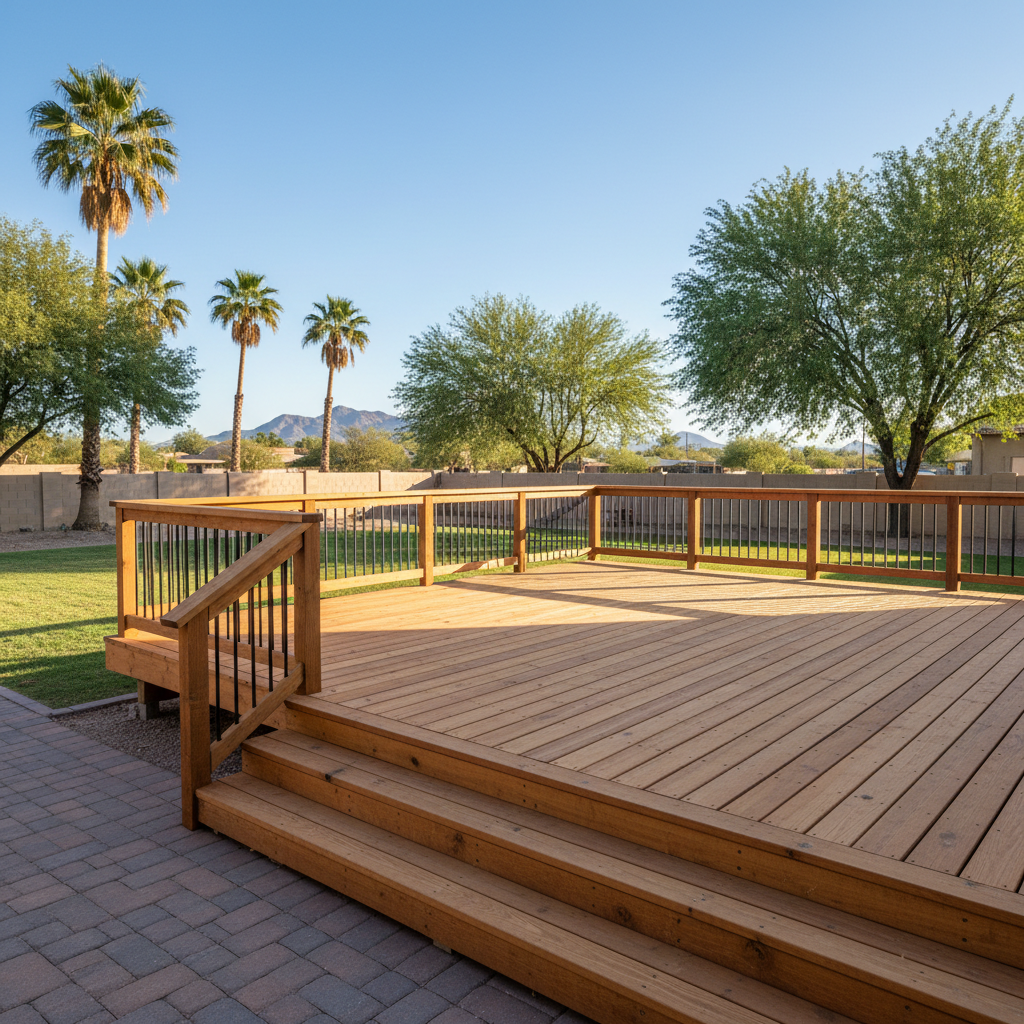
Alright, let's talk decks. Specifically, the wooden kind right here in Laveen. I've been building and fixing these things for a long time now, and believe me, I've seen plenty of projects go south. Most of the time, it's not because people are trying to cut corners—it's usually just that they don't know what they don't know. And in our particular desert climate, those blind spots can really cost you, bringing a bundle of headaches down the road.
You want a beautiful, useful outdoor space, right? A spot to truly enjoy those mild Laveen winter evenings or maybe some shade during our scorching summers. The last thing anyone wants is a deck that falls apart after just a few years, or one you end up wishing you'd never built. So, let's dig into some of the most common mistakes I come across, and how you can easily avoid them.
Ignoring Our Desert Climate When Picking Materials
This one's probably the biggest. What works perfectly for a deck in, say, Oregon, just won't cut it here in Laveen. Our intense sun, the dry heat, and even our monsoon season with its heavy rains and humidity—they all put unique stresses on wood.
- Using the Wrong Wood: Some woods simply aren't made for Arizona. Untreated lumber, especially for the main support pieces, is practically asking for trouble. It'll rot super fast when it gets wet. Even for the deck boards themselves, you need something that can handle all those UV rays without cracking, warping, or fading too soon. Cedar and redwood do offer some natural rot resistance, but they still need regular upkeep. Tropical hardwoods like Ipe or Machiche are denser and stand up better to our heat and UV, but, well, they come with a higher price tag.
- Forgetting About Heat Absorption: Ever walked barefoot on a dark patio in July? Ouch! Your deck is no different. Darker wood colors soak up and hold a lot more heat, making the surface scorching hot and pretty uncomfortable. Think about lighter stains or wood types if you're hoping to enjoy your deck without shoes on.
- Not Considering Maintenance: Every wooden deck needs some TLC, especially here. Skipping that annual staining or sealing to protect against UV damage and moisture is a guaranteed way to shorten your deck's life. Seriously, don't underestimate the time and money involved in keeping a wood deck looking good in this climate.
Cutting Corners on Footings and Foundations
Your deck is only as strong as what's underneath it. And in Laveen, our soil can be tricky. We've got expansive clay soils in some spots, and sometimes even caliche layers that can cause the ground to shift if you don't handle it right.
- Shallow Footings: Unlike places with a deep frost line, we don't have to worry about freezing and thawing causing things to heave. Still, footings need to be deep enough for stability, especially with our expansive clay soils. The City of Phoenix usually wants deck footings to go about 12 inches below grade. Don't just plop posts on concrete pads or cinder blocks directly on the ground; that's just asking for settling and shifting issues later on.
- Ignoring Soil Type: Different soils can hold different amounts of weight. If you're not sure what kind of soil you've got, always assume the weakest (clay) when you're doing your calculations. A good contractor, like Laveen Deck & Porch, will know how to check the soil and make sure your footings are designed to handle it.
- Poor Drainage Around Footings: Our monsoon rains, even though they're brief, can be intense. Water pooling around your deck footings can lead to instability and rot over time. You've got to make sure the area is properly graded to send water away from the foundation.
Skipping Permits and Inspections
I get it, paperwork is a drag. But trying to bypass the permit process for your deck project is a huge mistake that could cost you big time later.
- Unpermitted Work is a Red Flag: Most decks over 30 inches above the ground, or any deck with a roof or one attached to your house, will need a building permit from the City of Phoenix. Even if your deck is low, it still has to meet building codes. If a contractor tells you a permit isn't necessary when it clearly is, well, that's a massive red flag.
- Safety and Structural Issues: Permits and inspections are there for your safety, plain and simple. They make sure the deck meets structural requirements, weight-bearing specs, and all the local building codes. An inspector can spot errors that might otherwise lead to an unsafe deck or really expensive repairs.
- Problems Down the Road: Unpermitted work can cause headaches when you try to sell your home, potentially void your homeowner's insurance if something goes wrong, and could even mean fines or having to tear the whole thing down. Don't risk it, seriously.
Not Paying Attention to the Details (or Your Contractor Not Doing So)
The small things can make a huge difference in how long a deck lasts and how safe it is.
- Improper Fasteners: Modern pressure-treated lumber often has chemicals that can corrode regular screws and nails pretty quickly. You need hot-dipped galvanized or stainless steel fasteners. Using the wrong kind means your deck's connections will weaken over time, eventually leading to structural failure.
- Bad Ledger Board Attachment & Flashing: If your deck is attached to your house, that ledger board is super important. If it's not installed correctly—and, even more crucially, not properly flashed—it creates a direct path for water to get into your home's structure. That means rot, mold, and potential damage to your house.
- Inadequate Spacing Between Boards: Especially with wood, you need good spacing between deck boards. This allows for expansion and contraction with our temperature swings, and it helps with drainage. Without it, water can pool, leading to wood damage and premature wear.
- Unstable Railings: Railings aren't just for looks; they're a safety feature. Make sure they're built to code and feel solid. I've seen far too many wobbly railings that are just waiting for an accident to happen.
Building a wooden deck in Laveen can be a fantastic addition to your home, but you really need to go into it with your eyes wide open. Do your homework, ask the right questions, and make absolutely sure your contractor understands the unique challenges of building in our desert environment. It'll save you a lot of regret and ensure you get to enjoy your outdoor space for years to come.